
Merino vs Poll Dorset: Australia’s Two Great Wools
20th Nov 2026
If you’ve ever looked at an Australian wool label, you’ve probably seen the word Merino. It’s the star of the show. But there’s another sheep doing quiet work behind the scenes in a lot of Australian bedding, and that is the Poll Dorset.
They’re very different animals, and they produce very different wool. Here is how they stack up, round by round.
A Quick Intro to Both
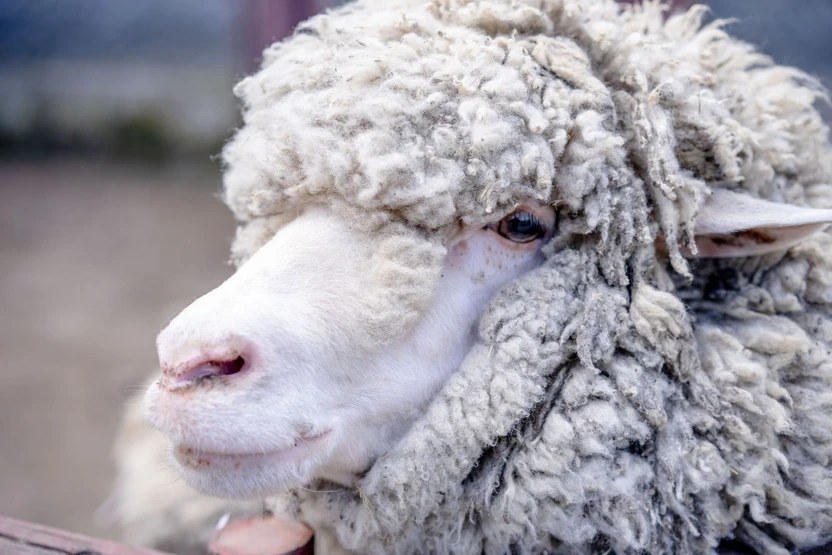
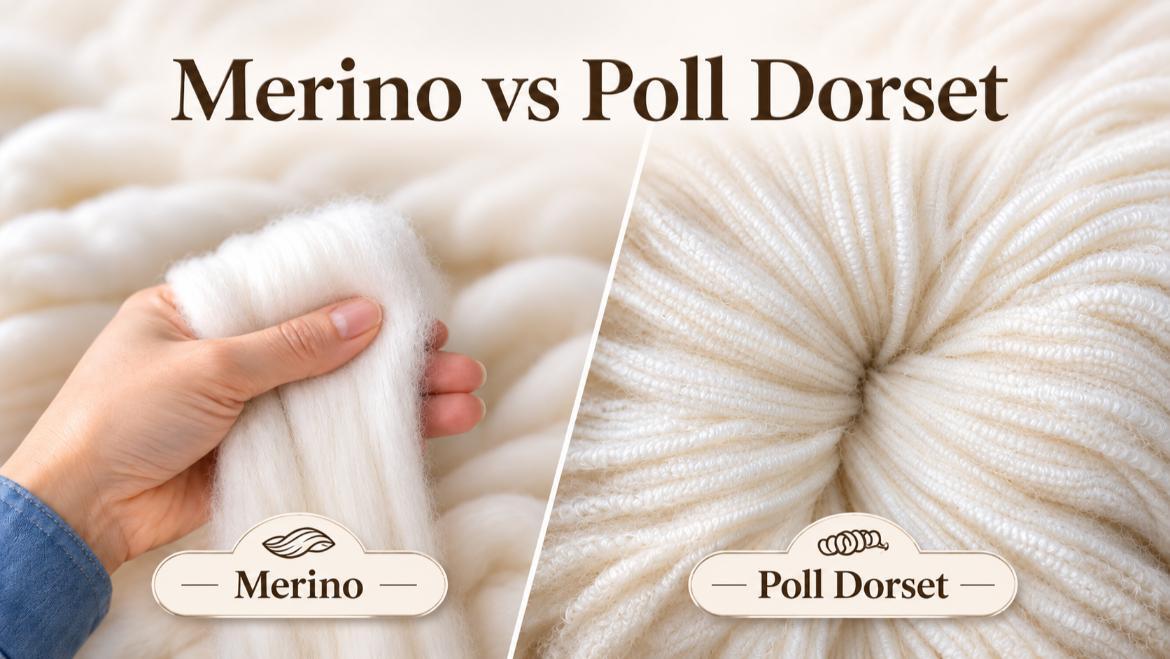
Merino sheep were bred for wool above all else. Their fleece is fine, soft and crimped. Australia grows a huge share of the world’s fine Merino, which is why Merino wool is such a big part of Australian wool products, from jumpers to socks.
Poll Dorset sheep are a hornless breed best known in Australia for meat. Their wool is coarser and bouncier than Merino, and it’s the kind of springy, medium fibre that suits bedding fill, in the same family as the Downs wool used in many quilts.
| Merino | Poll Dorset (Downs type) | |
|---|---|---|
| Fibre | Fine and soft | Thicker and springy |
| Feel | Silky against skin | Bouncy and resilient |
| Best known for | Clothing and next-to-skin wear | Bedding fill and loft |
| Strength | Softness and fine insulation | Spring and durability |
Softness
Merino wins this one easily. A lower micron count means a finer, softer fibre, and Merino is typically under 24 microns, which is why it’s the wool people are happy to wear against their skin. That is why Merino is used for socks, thermals and baby clothes.
Poll Dorset wool is thicker, so it isn’t what you want in a base layer. In a quilt, though, it sits inside a cotton cover, so the fibre never touches your skin directly.
Round winner: Merino.
Spring and Loft
Here, Poll Dorset has the edge. Its fibre is springy and resilient, which helps a quilt keep its loft and handle regular use. Think of it like the difference between a thin cotton ball and a bouncy mattress. The thicker fibre bounces back more readily, so the quilt holds its shape night after night.
That is why Woolstar uses Downs wool as the base of its Classic and Eco ranges. It’s a hard worker that keeps quilts feeling full and lofty.
Round winner: Poll Dorset (Downs type).
Warmth Without Weight
Both wool types have a natural crimp, a spring-like wave that creates tiny air pockets. Those pockets trap warm air and give you insulation without a heavy feel. Merino’s very high crimp can add a lot of warmth for its weight, while the bounce of Downs wool keeps the fill from collapsing.
In a wool duvet, the two work well together.
That’s the idea behind Woolstar’s Ultimate quilt, which blends 80% Downs wool with 20% Merino at 550 gsm. The Downs wool gives structure and loft, and the Merino adds softness.
Round winner: A Tie
Breathing and Moisture
This is wool’s party trick, and both types do it. Wool absorbs moisture vapour and moves it away from your body, which helps you stay dry. It can hold up to a third of its weight in moisture before it feels damp. So whichever fibre is in your wool doonas, you get the same temperature-regulating benefit.
Round winner: A Tie
Everyday Durability
A bed gets used every night, so toughness matters. Downs wool is built for this kind of work, and the springiness helps it handle regular use. Merino is still durable, but its fineness is best used where softness counts most.
Round winner: Poll Dorset (Downs type), for bedding fill.
Where It Gets Used
Think about each wool’s best job:
- Merino: clothing, socks, scarves, blankets and any place where wool touches skin
- Downs wool: quilt fill, mattress toppers and other bedding that needs loft and bounce
- Both together: premium bedding that wants softness and structure
Each one is great at its own job, and they work well as a team.
Sustainability
Both are renewable. Sheep grow a new fleece every year, and wool breaks down naturally in soil at the end of its life. Both also come from Australian farms, and with Woolstar’s Farm2Shelf program you can trace your quilt’s wool back to the farm it came from.
Round winner: a tie, and a win for Australian wool overall.
So Which Wool Do You Need?
It depends on what you are buying:
- A quilt for everyday use: look for Downs wool, as in Woolstar’s Classic and Eco quilts, for loft and easy care.
- A quilt that feels extra plush in winter: try a Downs and Merino blend, like the 550 gsm Ultimate.
- Something soft against skin: go for Merino, such as in socks, scarves and baby items.
If you are comparing quilts, the weight matters as much as the wool. A summer quilt sits around 300 gsm, an all-season quilt around 400 to 450 gsm, and a winter quilt between 500 and 550 gsm.
See the Difference for Yourself
Woolstar has made quilts from 100% Australian wool in Ingleburn, NSW since 1996, and every quilt is certified by Woolmark, OEKO-TEX Standard 100 and Australian Made.
Browse the wool quilts range to feel how the two wools work together, and ask the team if you want help choosing.