
Australian-Made vs Imported Wool Bedding: What’s the Difference?
20th Nov 2026
You’ve seen the tags: “Australian-Made”, “Made in Australia”, “Product of Australia” and a lot of bedding with no clear label at all. If you're about to spend good money on a wool duvet or a new mattress topper, it’s fair to ask whether any of it matters.
Short answer: yes, it can. Here are the questions people ask most.
Does “Australian-Made” Mean the Wool Is Australian?
Not always. “Australian-Made” tells you where a product was made, not always where every material came from. Under Australian consumer law, “Made in Australia” means the product was substantially transformed here, and a significant part of its production costs were Australian.
“Product of Australia” is stricter, since it usually means the key ingredients or components come from Australia too.
So the label is a good start, but it helps to ask a follow-up question: where was the wool grown, and where was it made into a quilt?
Isn’t Wool Just Wool?
No, and this is where it gets interesting. Wool varies by breed, by region and by how it’s processed. Fibre fineness, springiness and cleanliness all affect how a wool duvet feels and how long it lasts.
Australia is known for producing a lot of the world’s finest Merino wool, so Merino wool in Australia has a strong reputation. Good wool is only part of the story, though. How it’s cleaned, carded, lofted and sewn also matters.
What Is the Difference in How It’s Made?
This is the part people tend to overlook. A wool quilt starts as raw fleece, and it has to be cleaned, carded into soft layers, lofted, quilted and sewn. When that all happens under one roof, the maker has more control over each step.
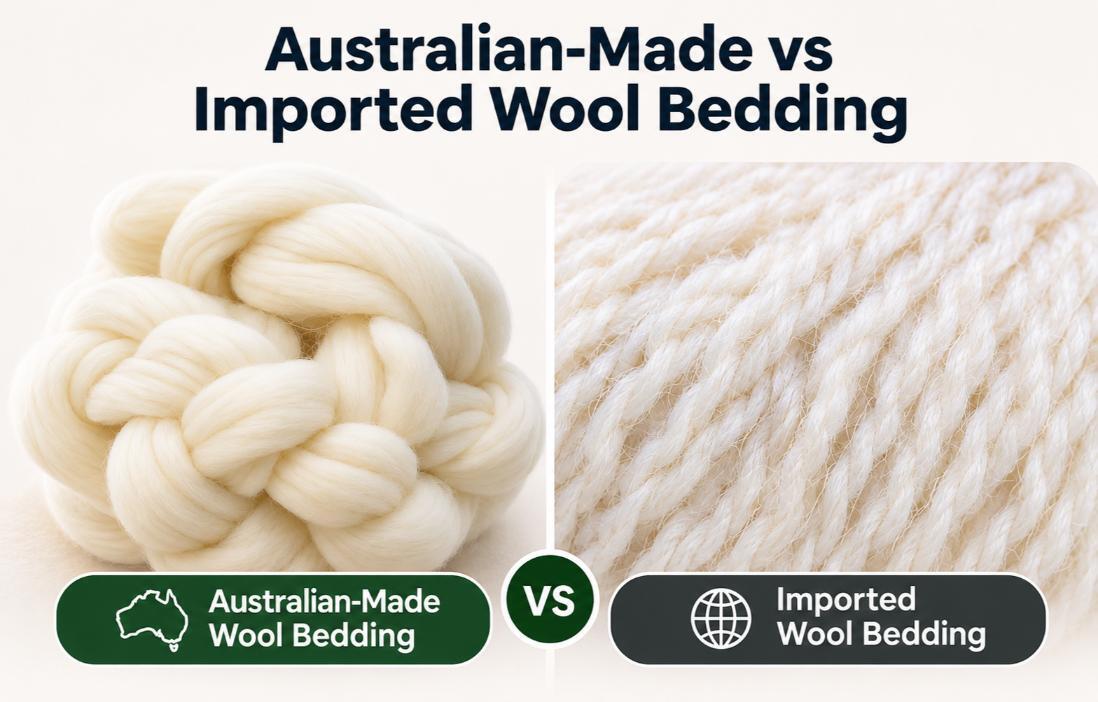
Woolstar makes its quilts in Ingleburn, NSW, and has done so since 1996. The wool is carded, lofted, quilted and sewn on its own textile machines. With imported bedding, the wool may be processed in one country, filled in another and sewn in a third, and it can be harder to know how much oversight there was along the way.
Can I Actually Trace Where My Wool Came From?
With some brands, you can. Woolstar’s Farm2Shelf program lets you trace the wool in your quilt back to its farm of origin. That kind of detail is rare in bedding, and it gives you real answers if you care about where your products come from and how the animals were looked after.
With imported products, traceability can be patchy. If it matters to you, ask the retailer before you buy.
Are There Certifications to Look For?
Yes, and they help you see through the marketing.
Here are the main ones on Woolstar quilts:
- Woolmark: confirms the wool content meets the Woolmark Company’s fibre standards
- OEKO-TEX Standard 100: tests components for harmful substances
- Australian Made: shows the product is made in Australia
When you compare a wool duvet, look for these logos and ask what they cover. Anything with no certification at all deserves a second look.
Is Imported Wool Bedding Always Worse?
It would be unfair to say that. Plenty of imported bedding is made well, and some people find it good value. The difference tends to show up in the details: how much you know about the wool, how long the product is backed for, and what happens if something goes wrong.
Woolstar backs every quilt with a five-year guarantee and offers fuss-free returns, which is useful when buying something you’ll use every night. When you compare, look at the warranty as well as the price.
What About Mattress Toppers?
The same questions apply. If you plan to buy a wool mattress topper, check where the wool was grown, where the topper was made and what certifications it holds. A topper sits right under you for eight hours a night, so it pays to know what is in it.
Have a look at Woolstar’s wool toppers if you want to see what a local one looks like.
Is It Better for the Environment?
Buying local usually means a shorter supply chain, and wool itself is renewable and biodegradable. Sheep regrow their fleece every year, and wool breaks down naturally in soil. Australian wool also comes from farmers who follow responsible animal husbandry practices, which Woolstar looks for when sourcing.
Does It Cost More?
Sometimes. Australian-made bedding can cost more upfront than a bargain import, because local wages, standards and materials add to the cost. The trade-off is that you’re paying for traceable wool, local jobs and a product that is built to last. Divide the price by the years you will use the quilt, and the gap often shrinks.
Orders over $149 from Woolstar ship free across Australia, which helps with the budget too.
How Do I Choose?
A quick checklist:
- Where was the wool grown, and where was it made?
- Can you trace it back to a farm?
- Which certifications does it hold?
- How long is the guarantee?
- Is the fill weight (gsm) clearly listed?
If you can answer all five, you’re in good shape. If the retailer can’t, that tells you something too.
Shop Woolstar, the Wool Australia Loves
Woolstar’s range covers quilts, toppers, pillows and more, all made from 100% Australian wool. Browse the wool quilts and find the weight that suits your home.